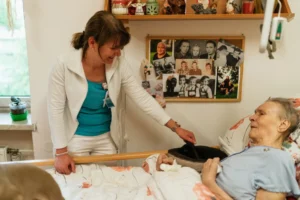

Watching someone you love live with motor neurone disease (MND) is one of the hardest things a family can go through. As their needs change, it’s completely natural to feel unsure about how to keep them comfortable or what the months ahead might bring.

That is where MND palliative care at home comes in. Far from being just for the final days, palliative support runs alongside daily life from early on.
It focuses on easing physical symptoms, alleviating worry, and giving your loved one the dignified, specialist care they need to stay safe in familiar surroundings.
Table of Contents
- What is motor neurone disease palliative care?
- The 5 stages of palliative care
- Managing daily MND symptoms at home
- Recognising MND end-of-life symptoms
- How care supports families and prevents burnout
- MND care at home
- Your MND palliative care questions answered
- Find expert MND palliative care when you need it most
Key takeaways
|
What is motor neurone disease palliative care?
Motor neurone disease palliative care is holistic support for someone living with MND, aimed at easing symptoms and improving comfort rather than curing the illness.
It cares for the whole person, physically and emotionally, along with the family around them. Importantly, it may begin soon after diagnosis, not only at the end.
According to the MND Association, six people are diagnosed with MND in the UK every day, and more than 5,000 adults are living with the condition at any one time.
Support tends to work best when it is planned early and adjusted as needs change. Palliative care for MND often includes:
- Relieving pain and other distressing symptoms
- Emotional and psychological support
- Help managing treatment and medication
- Practical support with everyday life
- Planning ahead for future care and wishes
- Bereavement support for family and loved ones
Depending on the person’s diagnosis and needs, this care may last for days, months, or even years.

The 5 stages of palliative care
Because MND progression can vary widely, care needs may change quickly.
Most people with MND pass away within two to three years of symptom onset, although some people live much longer. This is why having a flexible care plan in place can provide reassurance as needs evolve.
Palliative care is often described in five stages. The stages are not a fixed timeline, and each person moves through them differently.
| Stage | What it may involve |
|---|---|
| 1. Creating a care plan | Assessing needs and preferences and planning care from diagnosis |
| 2. Emotional support | Counselling and reassurance for the person and their family |
| 3. Delivering the plan | Managing symptoms and supporting daily life at home |
| 4. End-of-life care | Focusing on comfort and dignity in the final phase |
| 5. Bereavement support | Ongoing support for loved ones after death |
Understanding the five stages of palliative care may help you feel more prepared for what lies ahead, and more confident asking for the right support at the right time.
‘Home is where people feel safest. Our goal with palliative care is to bring clinical expertise into the living room so every day feels as comfortable, dignified, and manageable as possible’. – Jaspreet Anand, Registered Manager |
Managing daily MND symptoms at home
Long before the later stages, motor neurone disease brings practical challenges that affect everyday life.
Good MND care at home adapts to each of these, using the right equipment, techniques, and gentle support to help your loved one stay as comfortable and independent as possible for longer.
Support with day-to-day symptoms may include:
- Mobility and transfers: hoists, slide sheets, and specialist furniture to move safely and comfortably
- Communication aids: lightwriters, eye-gaze technology, and simple letter boards to keep a person’s voice heard
- Eating and swallowing (dysphagia): thickened fluids, adapted cutlery, and support with PEG or RIG feeding tubes
- Breathing support: help managing non-invasive ventilation (NIV) at home
Small, well-timed adjustments may make a real difference to comfort, dignity, and confidence.
Recognising MND end-of-life symptoms
As motor neurone disease reaches its later stages, the body’s muscles weaken further, which changes the kind of support a person needs. Knowing the common MND end-of-life symptoms may help families feel more prepared to respond with calm, gentle care.
Common end-of-life MND symptoms may include:
- Increasing difficulty with breathing
- Trouble swallowing and reduced appetite
- Greater tiredness and more time spent resting
- Weakness that limits movement and speech
- Changes in how a person communicates
Every experience is different, and these signs may appear gradually rather than all at once.
End-of-life motor neurone disease care focuses on relieving discomfort, supporting breathing, and helping your loved one feel safe and settled. The aim is always comfort and dignity, guided by the person’s own wishes.
How care supports families and prevents burnout
Motor neurone disease places a heavy load on the people closest to it, and family members acting as the main carer often carry the most.
Looking after your own wellbeing is not a luxury; it helps you keep supporting the person you love. Practical help is available, and asking for it is a sign of strength.
MND palliative care may support family carers by:
- Providing respite visits: Short-term cover so you can rest, recharge, or simply catch your breath.
- Managing medication and equipment: Ensuring ventilation equipment, suction, and medication schedules are handled accurately and calmly.
- Freeing you up to be family again: Taking care of the daily care tasks so you can focus on quality time, conversations, and companionship with your loved one.
You do not have to carry it all on your own. With the right support around you, you may find more space to rest, to cope, and to simply be present with your loved one, rather than being pulled in every direction at once.
MND care at home
MND care at home brings specialist palliative support into familiar surroundings, so your loved one may stay comfortable among the people and places they know.
A trained team may manage symptoms, help with daily tasks, and work alongside NHS and community services to keep care joined up.
At Aspire UK, our Leicester-based team provides specialist motor neurone disease care at home across the city, the wider county, and the Midlands.
We offer palliative care Leicester and Leicestershire families trust and rely on, shaping support around each person and adapting it as needs change. Our home-based support may include:
- A personalised care plan built with you and health professionals
- Help with personal care, mobility, eating, and communication
- Emotional and psychological support for the whole family
- Day, waking-night, overnight, and live-in care options
- Coordination with NHS teams, GPs, and specialist nurses
- Regular reviews as the condition progresses

Your MND palliative care questions answered
What causes MND?
The exact cause of motor neurone disease isn’t yet fully understood. For the vast majority of people, MND occurs out of the blue, with only about 5% to 10% of cases linked to a family history or specific genetic factors.
When should palliative care for MND begin?
It may begin at any point after diagnosis, and starting earlier often helps. Early support allows time to manage symptoms, plan ahead, and build trust with the care team before needs increase.
How many hours is palliative care at home?
There is no set number. It may range from a few visits a week to several hours a day, waking-night support, or full 24 hour care, depending on the person’s needs. Hours usually increase as the condition progresses, and a care plan sets out what suits each stage.
What are the last stages of MND?
In the later stages, muscle weakness usually becomes more widespread, affecting movement, speech, swallowing, and breathing. A person may tire more easily and need more support with daily tasks. Care at this point focuses on comfort, dignity, and relieving symptoms, guided by their wishes.
What is the difference between end of life and palliative care?
Palliative care is the broader support that may begin from diagnosis and can last months or years. End of life care is one part of it, focused on the final phase, usually the last months, weeks, or days.
How do the five stages of palliative care work alongside the NHS?
When following the 5 stages of palliative care, NHS health professionals and community care teams work together to guide families through each phase. They start with early care planning and emotional support, moving through daily symptom management at home, and extending to end-of-life care and bereavement support.
How can I fund MND care at home?
Depending on your circumstances, care may be fully or partly funded through the NHS or your local authority. Take a look at our paying for care page to learn more about your options or reach out to our team for help.